Meet Wendy: PhD Biomedical Engineer, NFL and NBA Cheerleader
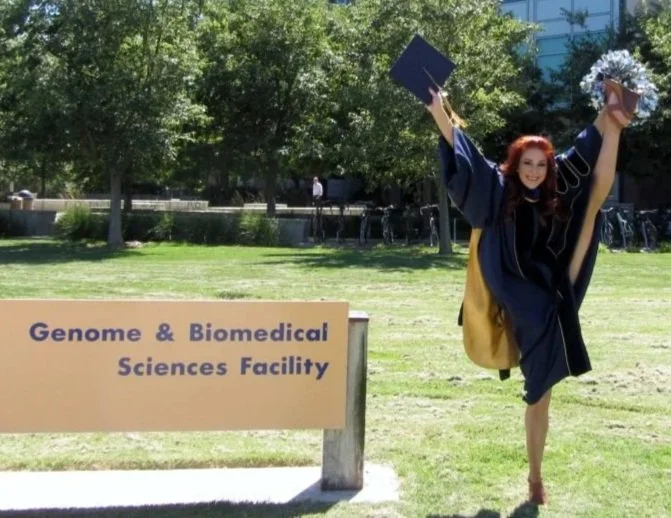
Meet SciCheer Wendy! Read on to learn more about her science and cheer background!
Wendy is a former Atlanta Falcons Cheerleader, Sacramento Kings Dancer, and Oakland Raiders cheerleader. When we first interviewed Wendy, she was in her final year in college and about to graduate with her Bachelor’s degree in Biomedical Engineering from the Georgia Institute of Technology. She finished up four seasons with her college dance team, the Gold Rush, and was cheering for the Atlanta Falcons.
Let’s start with school. After graduating from Georgia Tech, you went on to earn your PhD. Tell us about your experience in graduate school.
That’s right. I graduated from Georgia Tech in 2010 and moved to California to attend graduate school at the University of California Davis. When I graduated from college, I finally felt like I had figured out how to be a good student and how to be good at learning. But when I started graduate school, I was in class with other engineering students who were at the tops of their classes in college, and the material we were learning was harder. Honestly, all of this made me feel a little overwhelmed and discouraged. I had to remind myself that it was ok that the material was complex – that was the point!
Once I made friends, I realized we were all in the same boat, and we spent a lot of time studying together and celebrating once we completed each required class. The more senior students in my lab were also so supportive, and helped me and encouraged me along the way, which helped a lot. As I accomplished more, I gained more academic confidence. It was really rewarding to do well in a graduate-level class after not having done that well in the undergraduate-level of the class in college. Developing the confidence to know that, with practice/studying, I would be able to learn the material was a huge turning point for me. I learned that doing well comes down to acknowledging and accepting that something seems hard, having the confidence to believe that you will be able to figure it out, and putting in the work to make it happen.
Some other nuggets of wisdom I learned along the way:
People’s attitudes, and your own, are plastic – that is to say, they are malleable or changeable. As a cheerleader, we could hype up a dejected crowd suffering through another loss just by dancing to a well-loved song or yelling a cheer. In life, a one-off experience with someone who has a positive attitude can be encouraging and invigorating. Seek to be a cheerleader for others, and surround yourself with people who will act as your cheerleaders.,
Tell us about your research.
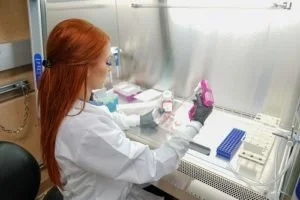
My research focused engineering implants of articular cartilage and the underlying bone with the ultimate goal of healing damage to cartilage in people’s knees. In addition to developing these implants, I created technology to purify cells (which is now patent-pending!), technology to generate large-size engineered cartilage pieces (larger than the size of a quarter), and contributed to understanding fetal cartilage development. I remember that some people were really nervous to defend their dissertations (a presentation and question session of all your research – basically your final exam to get your PhD), and I was actually really excited about it because it was an opportunity for me to tell people what I had done over my six years in school and they HAD to pay attention!
You kept cheering professionally while in school. How were you able to manage both?
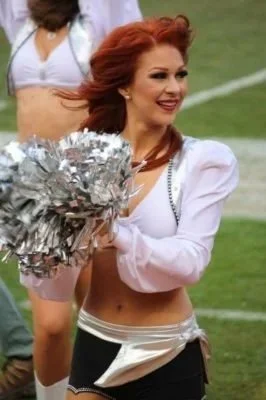
It felt like going to practice and dancing was an outlet for school and school was an outlet for dancing. It was energizing to go from using my brain all day to moving my body and seeing my friends at practice at night. For the four years I cheered for the Raiders, I commuted from Sacramento to Oakland. The carpool rides with my friends were so fun, and the times I had to drive alone gave me a chance to think about my research from a zoomed-out perspective.
My friends, family, and research group were very supportive of me cheering, and I’m so grateful for that. Their support and flexibility allowed me to work somewhat on my own schedule, often nights and weekends, so that I could do things like dance at Monday or Thursday Night Football games and attend community appearances that conflicted with a “normal” work day. I also think people recognized the value and uniqueness of me cheering. I did a lot in the community, stayed physically active, and made life-long friends.
In addition to your PhD research, you also worked with microbes in space! How did that come about?
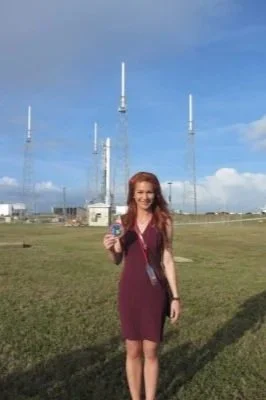
I was a Co-Principal Investigator of Project MERCCURI, which was a huge citizen science project the Science Cheerleaders helped develop. I worked with other researchers from UC Davis, SciStarter, other Science Cheerleaders, and our SciCheer Space Guy, Mark, to write a scientific proposal that combined microbial research and citizen science into a microbial playoff in space! We submitted out proposal to the Space Florida International Space Station Research Competition and were one of the winners! The Science Cheerleaders led a lot of events for citizen scientists to collect microbe samples from high-touch surfaces, like cell phones. Then we worked with UC Davis to select 48 microbes and with Space Florida and NASA to launch our experiment to the ISS in April 2014! The whole thing was such an amazing experience. I got to visit the ISS mock up at the Johnson Space center, help develop the materials the crew on board the ISS wold read to teach them how to do our experiment, and watch the launch of our experiment.
Now that you you have your PhD, what are you doing now?
After I graduated from UC Davis in 2017, I moved to Southern California! I’m a Translational Post-doctoral Fellow at UC Irvine now. My research still focuses on engineering knee articular cartilage, as well as engineering nose cartilage and working to translate the technologies I develop from the lab to clinical products to help patients. I’m excited about my research in nasal cartilage because it’s a greatly understudied area. From an engineering perspective, we know very little about what the cartilage is made of and what its mechanical properties are. Engineered nasal cartilage is also greatly needed for reconstructions after facial burns, cancer, trauma, or even birth defects like cleft palates.
In addition to working at UCI as a researcher, I co-founded a biotech start-up company with my colleagues from the lab. The mission of our company is to pursue the commercialization of an engineered knee cartilage repair product using technologies from our lab, some of which I developed during my PhD. I serve as the Director of Regulatory and Clinical Affairs. In that role, I help develop the strategy to pursue FDA (US Food and Drug Administration) approval for our products. As a Biomedical Engineer, I want to see the research I’m doing in the lab contribute to a medical product that will help someone live a longer and happier life.
We heard you also went back to school again?
Yes! I’m almost done with a Masters of Science in Regulatory Science from the University of Southern California. When I started learning about the translation of biotechnology, I realize how important it was to understand the regulatory paths and structure of how medical products are regulated by the FDA. The classes I’ve taken have been so interesting and really valuable to my job. It’s extremely validating to apply what I just learned in class on Saturday when I go to work on Monday. From a personal perspective, it’s also been really enlightening. For example, I learned that vitamins, dietary supplements, and make up have almost no regulatory oversight because of lobbying from their industries. I find it kind of scary to think that no one is mandated to check to make sure that what the company says is in the vitamin is actually in the vitamin, or that nothing extra or potentially harmful is in it.
Last time we spoke, your advice to other young women was to not get discouraged. Do you have any additional advice?
This is still the best advice I can give. I think many girls get discouraged when something is hard because they see other people who seem like they’re having an easier time learning something or they think it should be easier than it is. Maybe some things come easier to some people, but I certainly wasn’t one of them. I’ve had to work hard and spend a lot of time to learn some things, and through all of it, I realized that learning is a skill. It’s like cheering or dancing: the more you do it, the better you get. Everyone will get to a point where they experience something “hard.” Ultimately, I believe success and the ability to learn in STEM comes down to a person’s confidence to know they can figure it out and how hard they work to make that happen. Completing my PhD was one of the hardest things I’ve ever done, but I kept reminding myself of what I tell people about science as a Science Cheerleader. You weren’t born knowing how to walk, but you figured it out and you practiced and now you’re running! That’s how you get good at science. It’s OK if it’s hard when you start, that means you’re going to do something important. You’ll figure it out, and with practice, you’ll start running before you know it.